We built Aira because the gap between medical information and human understanding causes real harm — and falls hardest on the people who can least afford it.
Sixteen years ago, my husband became sick.
We have seen specialists. We've traveled to appointments. We've collected thousands of pages of medical records, lab results, imaging reports, discharge summaries, and physician notes. After sixteen years, we still don't have all the answers.
What surprised me most wasn't how complicated medicine was. It was how difficult it was to understand.

Every appointment ended with more paperwork. More terminology. More abbreviations. More questions.
I would sit at the kitchen table late at night trying to make sense of lab reports and medical notes written for clinicians, not patients. I wasn't a physician. I was a wife trying to help someone she loved.
Over time, I learned how to read bloodwork. I learned how to organize medical records. I learned how to prepare for appointments and ask better questions. But I often wondered: why does understanding your own healthcare have to be this hard?
While many people were talking about what AI could do for hospitals, physicians, and researchers, I kept thinking about patients.
What if someone could leave a doctor's appointment and actually understand what was said? What if medical language could be translated into plain language? What if patients knew what questions to ask next? What if caregivers didn't have to navigate complex medical information alone?
That idea became Aira.
Aira is not designed to replace physicians. Aira is designed to help patients understand them.
Simply press record during your visit. Aira listens to the conversation, creates a clear summary, explains important medical information in plain language, and helps identify questions worth discussing with your healthcare team.
That's it. Simple. Because healthcare is already complicated enough.

I built Aira because I spent sixteen years wishing something like it existed for my family.
If you've ever left a medical appointment confused, overwhelmed, or unsure what happened next, you're not alone. I've been there.
And that's why Aira exists — not because technology needed another product, but because patients deserve to understand their own healthcare.
"Until every patient understands."
AI in Healthcare Executive Education — perfect capstone evaluation
Years navigating medical complexity alongside her husband Jay shaped every product decision
Built from day one to serve patients across language, culture, and background
Optional faith-based guidance that meets patients emotionally and spiritually

I've spent more than twenty-four years in operating rooms, boardrooms, and everywhere in between.
As a cardiovascular surgeon, a healthcare executive, and, more often than I expected, as someone trying to bring new technology into systems that weren't built for change.
Early in my career, I helped establish Pakistan's first minimally invasive cardiac surgery program and performed the country's first transcatheter aortic valve replacement. Later, I trained physicians at nearly ninety structural heart programs across the United States and advised medical technology companies developing the next generation of cardiovascular devices. Every one of those efforts taught me the same lesson: the hardest part of innovation in healthcare is rarely the technology itself. It's getting that technology into the hands of the people who need it, in a form they can actually use.
For most of my career, the people I focused on bridging that gap for were physicians and health systems. Patients were part of the equation, but not always the center of it.
When I first saw what the platform could do — listening to a patient's own appointment, translating it into language they could understand, helping them walk back into their next visit with the right questions — I recognized something I hadn't seen built with this kind of intention before. Not a tool for hospitals. Not a tool for clinicians. A tool for the patient sitting across the desk, trying to make sense of what they'd just been told.
My role is to make sure Aira holds up to the same clinical rigor I'd expect from any tool I'd put in front of my own patients — accurate, safe, and genuinely useful in the moment it matters most. I bring frontline surgical experience, executive leadership, and a career spent helping new technology earn its place in real clinical workflows. Maria brings the lived experience of a caregiver who spent sixteen years navigating exactly the problem we're solving.
That combination is rare. I don't think Aira works without both.
I've spent my career at the bedside, where understanding a patient means listening first.
A registered nurse, I began at The Ohio State University Medical Center before joining Fairfield Medical Center, where I served across nearly every corner of the hospital: intensive care, pediatrics, labor and delivery, medical-surgical, cardiac care, the pain center, and the cardiac catheterization lab. I later brought that hospital-wide perspective to internal medicine in a private physician practice.
That range gave me a rare view of the patient journey — the newborn and the cardiac patient, the surgical floor and the exam room — and a clear sense of where patients get lost along the way. Time and again, I saw people leave an appointment nodding politely, holding instructions they didn't fully understand.
Now retired from full-time practice, I have not stopped advocating. Every week I visit a nursing home to sit with a woman who is over one hundred years old — a former patient of mine from my working years.
It simply continued.
I bring that same constancy to the Aira board, where my decades at the bedside keep the company anchored to the people it serves — until every patient understands.

Lab results with reference ranges that mean nothing. Discharge papers written for other doctors. Prescriptions with no explanation. Most people guess, worry, or ask someone who also doesn't know. That gap causes real harm.
Patients who don't understand instructions miss follow-up appointments and medication schedules at significantly higher rates.
Without context, even normal results feel alarming. The unknown is almost always scarier than the truth.
Misunderstood discharge instructions are one of the leading causes of hospital readmission within 30 days.
Family members managing someone else's health carry this confusion alone — without training, without support.
Aira reads lab reports, discharge papers, prescriptions, and clinical summaries — then explains them in plain language patients and caregivers can actually use.
It does not tell you what's wrong with you. It does not replace your doctor.
A question about the same lab result gets a different response for a patient, an elderly parent's caregiver, or a care team. No settings. Aira adapts from the first message.
Medical anxiety is real. Aira is designed to never alarm unnecessarily — while still being direct about what matters. Human language, not clinical jargon.
Understanding without direction isn't enough. Every Aira response includes practical next steps: what to ask your doctor, what to monitor, what's routine and what isn't.
For patients and families who find strength in faith, Aira can offer guidance that honors the whole person — medical, emotional, and spiritual — without ever imposing.
Medical information is among the most sensitive data that exists. We treat it that way — not because regulations require it, but because the people using Aira deserve nothing less.
Your documents are processed in encrypted, isolated sessions. They are never stored beyond your active conversation unless you explicitly choose to save them.
We're building toward full HIPAA certification. Our infrastructure follows privacy-first standards from day one. We're working through audit controls, BAAs, and access logging — formal requirements we won't claim before we've earned them.
All documents encrypted in transit and at rest on AWS infrastructure.
Your data is never sold to third parties or used for advertising — ever.
We do not use your conversations or documents to train AI models.
Isolated, private processing sessions per user on AWS infrastructure.
Documents cleared at session end unless you explicitly choose to save.
Built to support BAA agreements as we scale to enterprise and clinical use.
Every design decision in Aira traces back to one of these people — and the moment where clear information would have changed everything for them.

Managing someone else's health is exhausting and confusing — especially when documents arrive in language designed for clinicians. Aira helps you stay on top of what matters without needing a medical background.
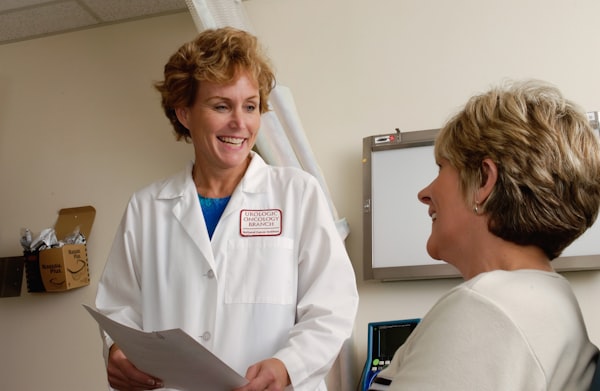
A first diagnosis, an unexpected result, a discharge after something scary. Aira gives you a starting point — something to hold onto before you can talk to your doctor.

When someone you love is sick and you can't be there, Aira helps you understand what's happening and what questions to ask. So distance doesn't mean being left in the dark.
"The need is universal — wherever people face medical systems that feel inaccessible, we want Aira to close that gap."
NeuroMed Aira is an informational tool. It does not provide medical diagnoses and is not a substitute for professional clinical judgment. All document processing is conducted on secure AWS infrastructure with end-to-end encryption. Always consult a qualified healthcare provider for medical decisions. *Harvard Medical School Executive Education programs are non-degree continuing education. © 2025 NeuroMed Aira. All rights reserved.