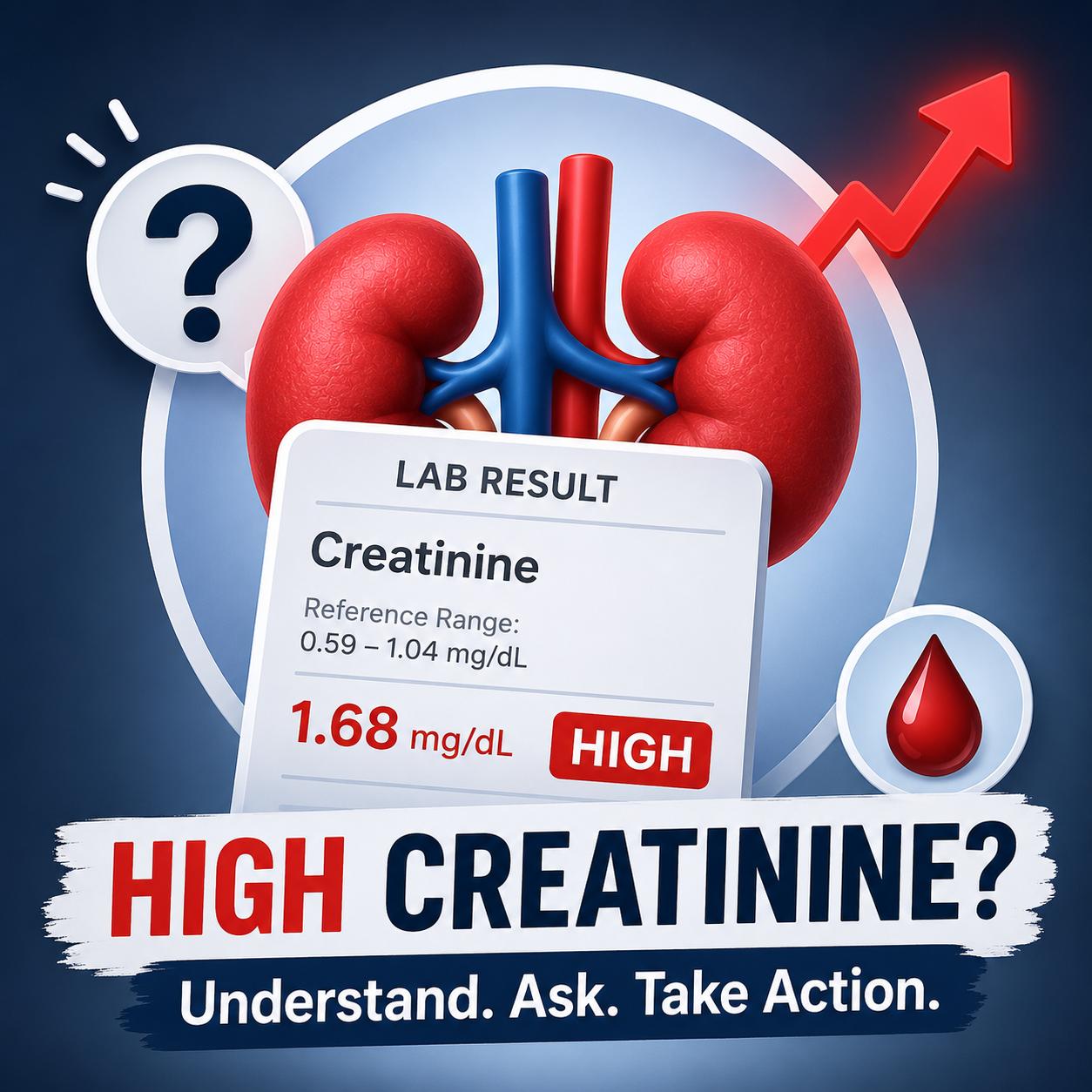
Got a lab result showing **high creatinine**? We explain what it means, when to worry, and what questions to ask your doctor — in simple, clear language. You got your lab results back. Everything looked fine — until you noticed one line flagged in red: **Creatinine: HIGH**. Your heart dropped a little. Now you are searching the internet at midnight, trying to figure out if this is serious. Take a breath. You are not alone. This guide explains what creatinine is, what a high level can mean, and what to do next. ## What is creatinine? Creatinine is a waste product your muscles produce naturally every day. Your kidneys filter it out of your blood and remove it through urine. Think of it like your body’s built-in trash pickup: your kidneys are the truck, and creatinine is the garbage they are supposed to collect. When creatinine in your blood is higher than normal, it can mean your kidneys are not filtering as efficiently as expected. But **higher than normal does not automatically mean something is seriously wrong**. ## What are normal creatinine levels? Normal ranges vary by age, sex, and body size, so your result should always be interpreted in context. - **Adult men:** 0.74–1.35 mg/dL- **Adult women:** 0.59–1.04 mg/dL- **Older adults and children:** often lower ranges Your lab may flag a number as “high” based on a general range that does not fully account for your individual factors. Your doctor’s interpretation matters more than any single number. ## Common reasons for high creatinine Not all elevated creatinine means kidney disease. Common causes include: ### Temporary causes (often harmless) - Dehydration (most common reason for a mild elevation)- Eating a large amount of meat before the test- Intense exercise the day before bloodwork- Certain supplements (including creatine) ### Medical causes that need follow-up - Reduced kidney function (early or chronic kidney disease)- High blood pressure affecting the kidneys- Diabetes-related kidney changes- Urinary blockages A single high creatinine result is rarely a reason for panic. Many clinicians repeat the test and look at trends before making conclusions. ## Questions to ask your doctor Bring these to your appointment: 1. Is this level significantly above normal for my age and body type?2. Should we retest to confirm, or track a trend over time?3. Could this be dehydration or something I ate?4. Should I also check my **GFR (glomerular filtration rate)**?5. Do I need to change my diet, medication, or water intake? > Pro tip: Upload your full lab report to [NeuroMedAira.org](https://neuromedai.org) before your visit. Aira summarizes results in plain language, flags what is worth discussing, and helps generate tailored questions in multiple languages (including Spanish and Tagalog). ## Your results deserve a real explanation Lab results should be more than a scary number on a page. **NeuroMed Aira** was built for this exact moment — when you are confused, anxious, and need clear guidance. Upload your report, ask in plain language, and get a compassionate explanation. 👉 Try NeuroMed Aira free at [neuromedai.org](https://neuromedai.org) Neuroscience Diagnostics Patient care Research